

Down the rabbit hole

Most American rabbits do not live in holes, because they do not dig them. Most American rabbits live in shallow depressions (forms), but neither you nor I has ever heard anyone talk about going down the shallow rabbit depression.
Some British rabbits live in holes (warrens), but all of the rabbits in Lewis Carroll live in holes, which is why we still go down them. I get fascinated by the rabbit hole, because it is more-or-less linguistic nonsense: a language artifact from another place that we treat as fact. If you didn’t do research on rabbit domiciles (most people don’t) the language would convince you that rabbits lived in holes, elsewise why would we all be going down them? We might as well go up the skunk nest, or into the crow pantry, or descend to the bovine cavern for all the sense the rabbit hole makes.
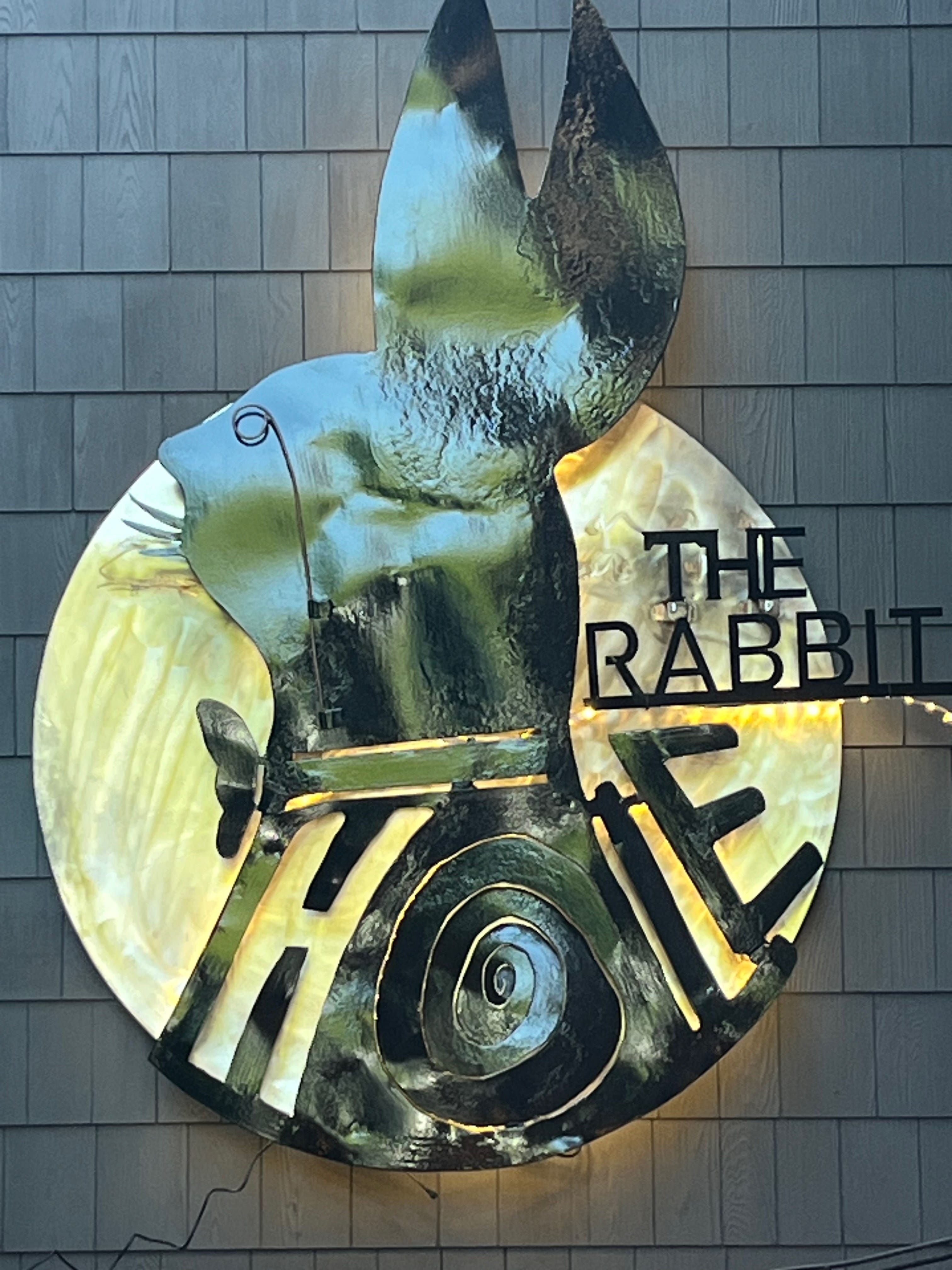
You have a murder of crows, but people look at you funny if you describe a murder of politicians. Ravens never assemble murderously: they generally congregate in an unkindness or a conspiracy. Politicians never form a conspiracy, even when they are actively conspiring. A group of foxes is called a skulk, but good luck finding a group of foxes. A group of politicians is never a skulk, even if they are skulking.
A misnomer is an incorrect, unsuitable, or misleading name applied to a person, object, or concept. Like calling the United States a democracy. Or calling the latest shitty tax grift a ‘big beautiful bill’. The parlance of politicians and attention merchants generally speaking is interlaced and studded with locutional deception, designed to taint, taunt, and obfuscate. We think about the misappropriation of funds regularly, but what about the misappropriation of language? We should develop a unit of measure of the velocity at which falsehoods outpour the mouths of talking heads. (We could calculate it in Hegseths per minute).
Language is a map: certain philosophers have suggested that it is co-terminous with the limits of our worlds. While this is obviously not true– I have sensations and feelings all the time that I cannot translate into words– it is often a limit of what I can share from my world with others. To the extent that I can map language onto my experience, the extent to which I can cause it to adhere with some sense of proportionality to the contours of what happened, I can share the experience with someone in a way that they can understand.
I was recently humbled and vitalized to have an experience that I could not translate into words at all. I recently received bodywork from the preternaturally gifted body therapist Kelley Curtis, (you would not regret traveling to Portland simply to receive the gift of her touch) and the experience was singular.
At one point, while she was working on my back– I was lying facedown and she was touching my back– the best description I can give you about this (I’ve thought about it a lot) is that the cadence and pressure of her hands caused a thick cerulean blue paint apparently endogenous to my body to flow diagonally forward through the space to the left of my heart, clearing out accumulated residues of encrusted emotion and cynicism that then flowed out vaguely forward of my heart (the current was definitely left to right and back to front). When she moved her hands to the right, the paint changed color and texture (purple, more viscous) until it became nearly black and opalescent.
Later in the session, when I was on my back and she palpated my celiac plexus, it felt as though she had firmly grabbed hold of an inward octopus whose writhing tentacles were clearly nerves, and from which I was able to feel the neural innervation of my liver, the back of my heart, the lower left quadrant of my digestive system above my left hip, etc.
My abject failure to be able to describe this experience increased my empathy for people studying autonomics with me, who are regularly noticing that they have a hard time finding descriptive textures that adequately map onto neurological experiences they are having. Sometimes when I am working clinically I ask a person, How does that feel? And they look at me and shake their heads like- There do not exist words for this.
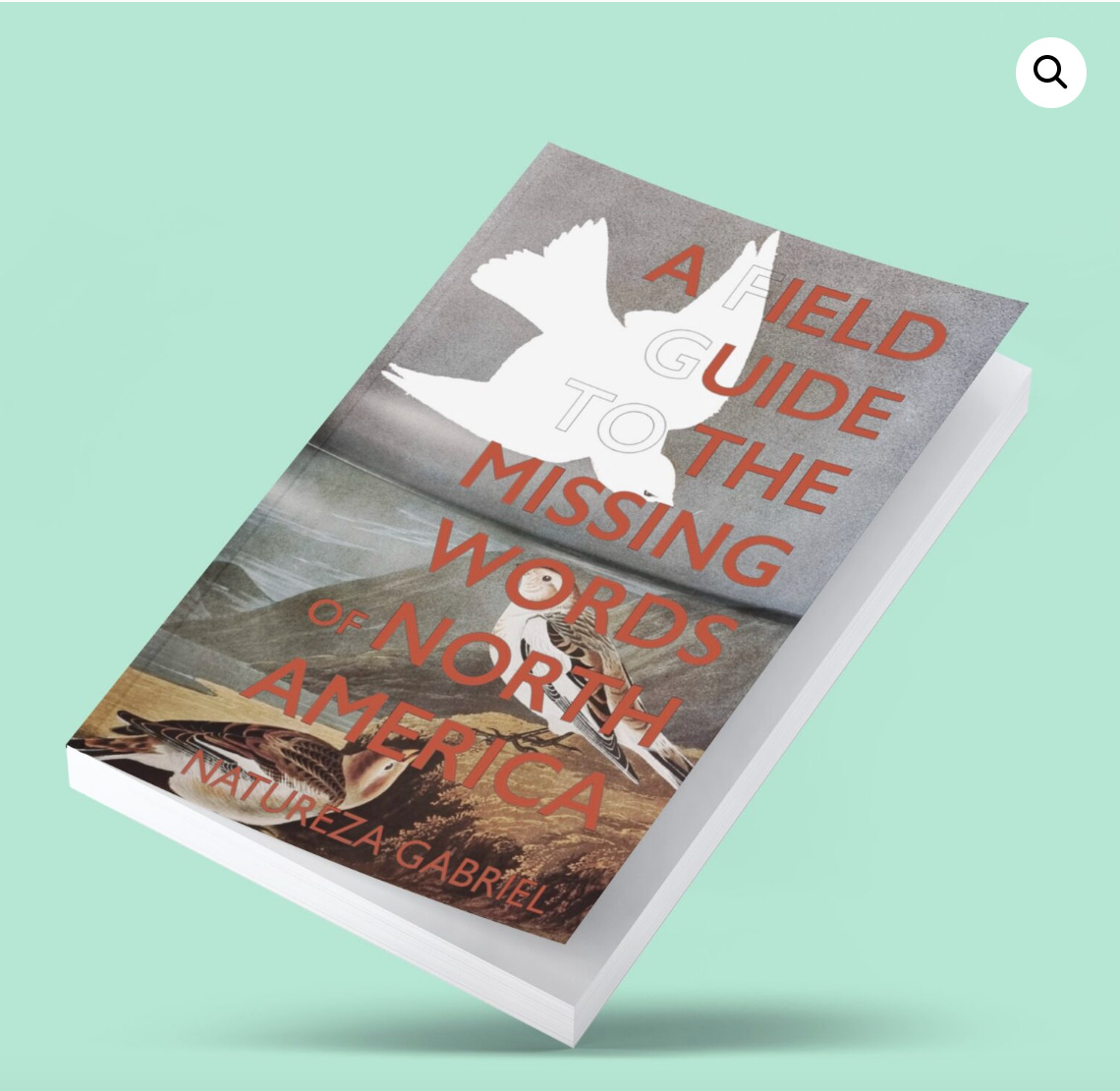
Which may or may not be true. In all probability there do not exist words for this IN ENGLISH. Possibly the reason that I’ve been fascinated by lexical gaps in English since I was a teenager more than thirty years ago resides right here. Since sitting down on a meditation cushion at 19, interocepting, and realizing it would be next to impossible to share what I was noticing with someone else, my interest in interoceptive neurology and the lexical gaps in English have developed together. Very soon I am going to publish the revision of a book we originally published in 2023 as Keywords. The book– revised, illustrated anew, and retitled, is now called A FIELD GUIDE TO THE MISSING WORDS OF NORTH AMERICA.
As many of you know, I am a cartographer (mostly neural and interoceptive), and my lifework in Autonomics is, in part, a new map of the living autonomic nervous system. A Field Guide to the Missing Words of North America is also a map: words collected from 46 languages for things that are impossible to name in English. It is designed to increase the surface topography over which you can spread language. Please come down the bovine cavern with me in this exploration of all the words we cannot say. Preorders are open. Books will ship in the next couple of weeks….
Looking forward!!