

Finding Home in Your Nervous System workshop - Saturday April 25
Finding Home in Your Nervous System

This Saturday April 25 I’ll be teaching a 3-hour course called Finding Home in Your Nervous System.
This is a straightforward exploration of
what your nervous system is (a lot of what you have been taught- if you have been taught about it- is under-accurate)
why the Autonomic Nervous System is the layer of it that you should understand
how this layer has the deepest shaping force on your moment-to-moment experience of wellbeing
the three primary variables that govern how it makes sense of your internal and external experience (autonomic temperature, recruited neurology, pervading neurochemistry)
how we can increase the inputs to wellbeing (increase health)
how we can work more effectively with the two primary kinds of stress (there are two, not simply one)(decrease, metabolize, and transform stress)
This is part of our larger project of developing a non-technical version of this work for the general population (I’m going to teach it in person May/June of 2027 at the Omega Institute in upstate New York. You can use this link add yourself to the notification list when this training opens for registration.)
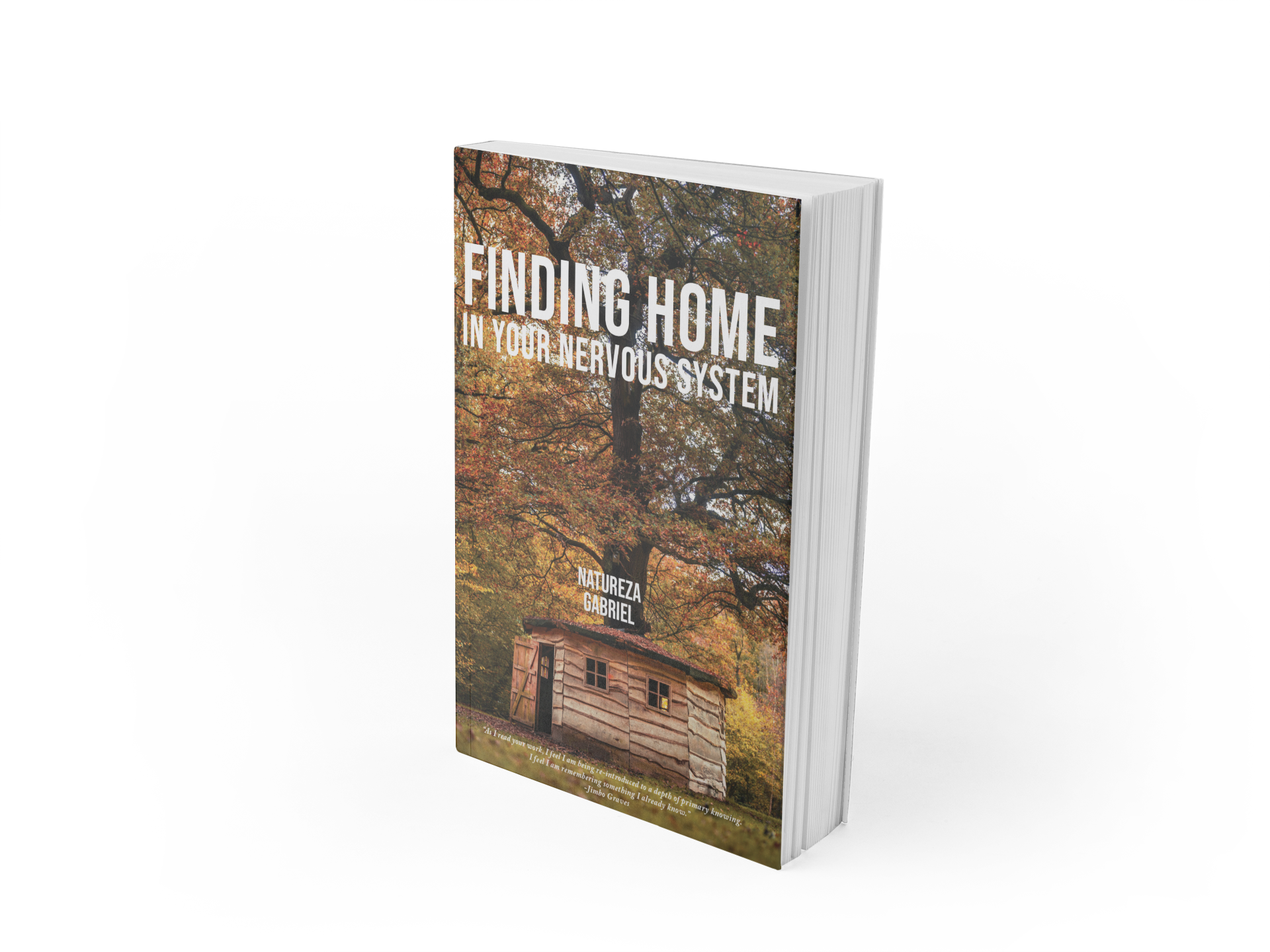
Join me Saturday April 25 (in three days!) for the class. After this class I’m off to Bainbridge Island, back to teach in Northern California, then off to Europe to teach. In other words, this is your last chance to do this for awhile.

From the publishing side of our work…
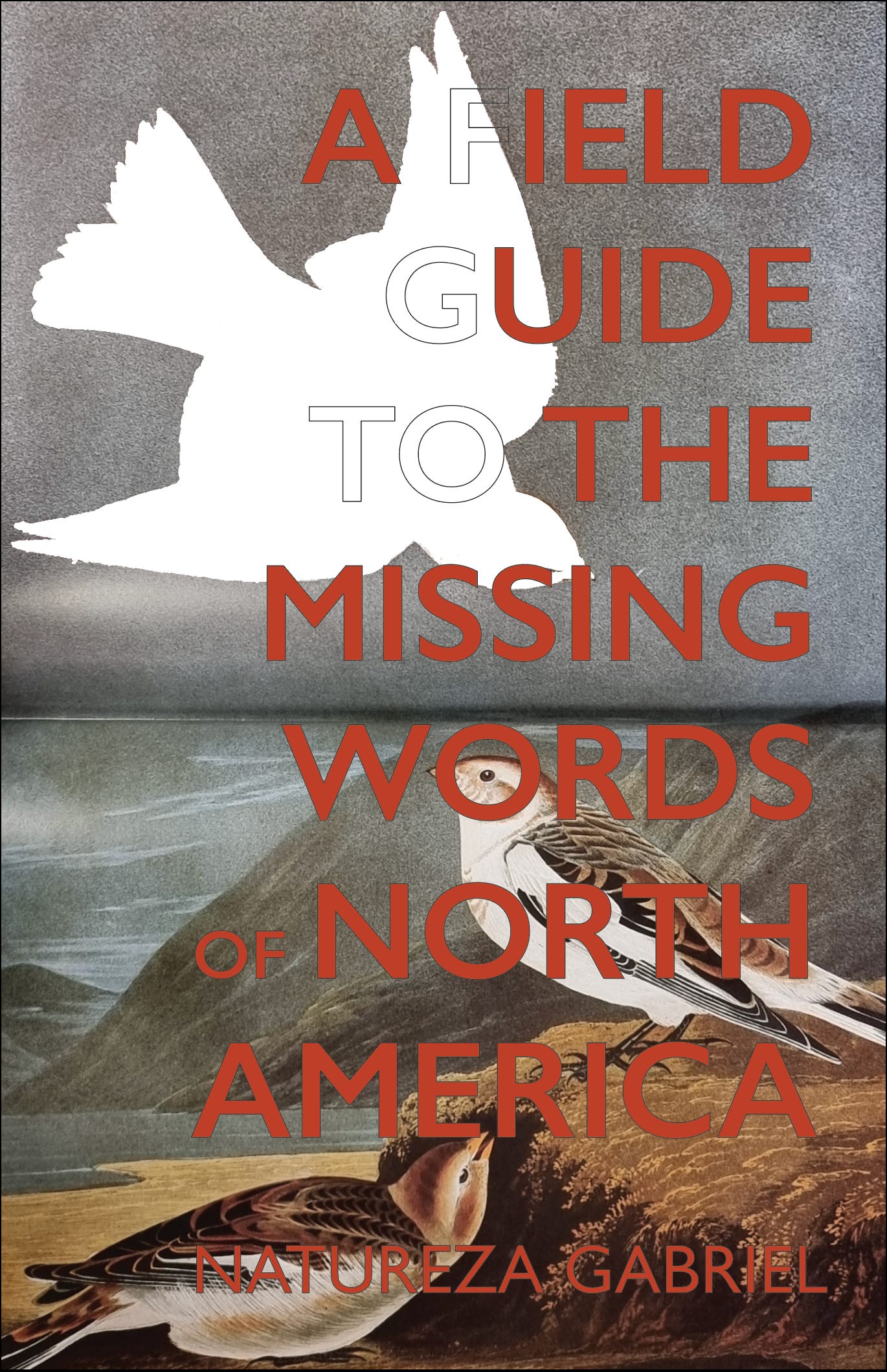
is open for preorder, shipping May 15, 2026.
Inuit peoples have 50 words for snow because their survival requires this. Language provides texture, clarity, and differentiation of our experiences. It maps the knowable, and provides containers for our experience. The origin of words also deeply reveals how we see ourselves, our world, and our place in it. But how can you talk with clarity and precision about something that has happened if there are no words for it in your language? Driven by personal necessity, and the awareness that things were happening in his mind and life that the language he grew up speaking did not have the capacity to describe, Natureza Gabriel has spent more than 25 years learning words from different languages and cultures that map aspects of our internal, relational, and nature experience unnamed in the English language.
Compiled here for the first time in one place is a map of words with power to change your mind and what you see. This book opens a doorway to a new relationship with language, and possibilities of describing, with precision and nuance, aspects of our human experience that haven’t been named in English. Did you know, for example, that there’s a word in Yiddish for a kind of knowing that comes from your guts? That the word for neighbor in Filipino really means an awareness that we are not alone? That in Japan there is a word for the color of sunlight filtered through leaves? That the word for meditation in Hebrew literally means, ‘bring your heart to it.’ That there’s a word in the Indigenous Kumeyaay dialect that means, ‘I see the fire in your heart.’ A Field Guide to the Missing Words of North America opens the door to a new world of meaning.
This is the paperback version of the book. (This is an updated, revised, re-titled and reimagined version of our book Keywords: A Field Guide to the Missing Words, from June 2023, previously published in hardcover)
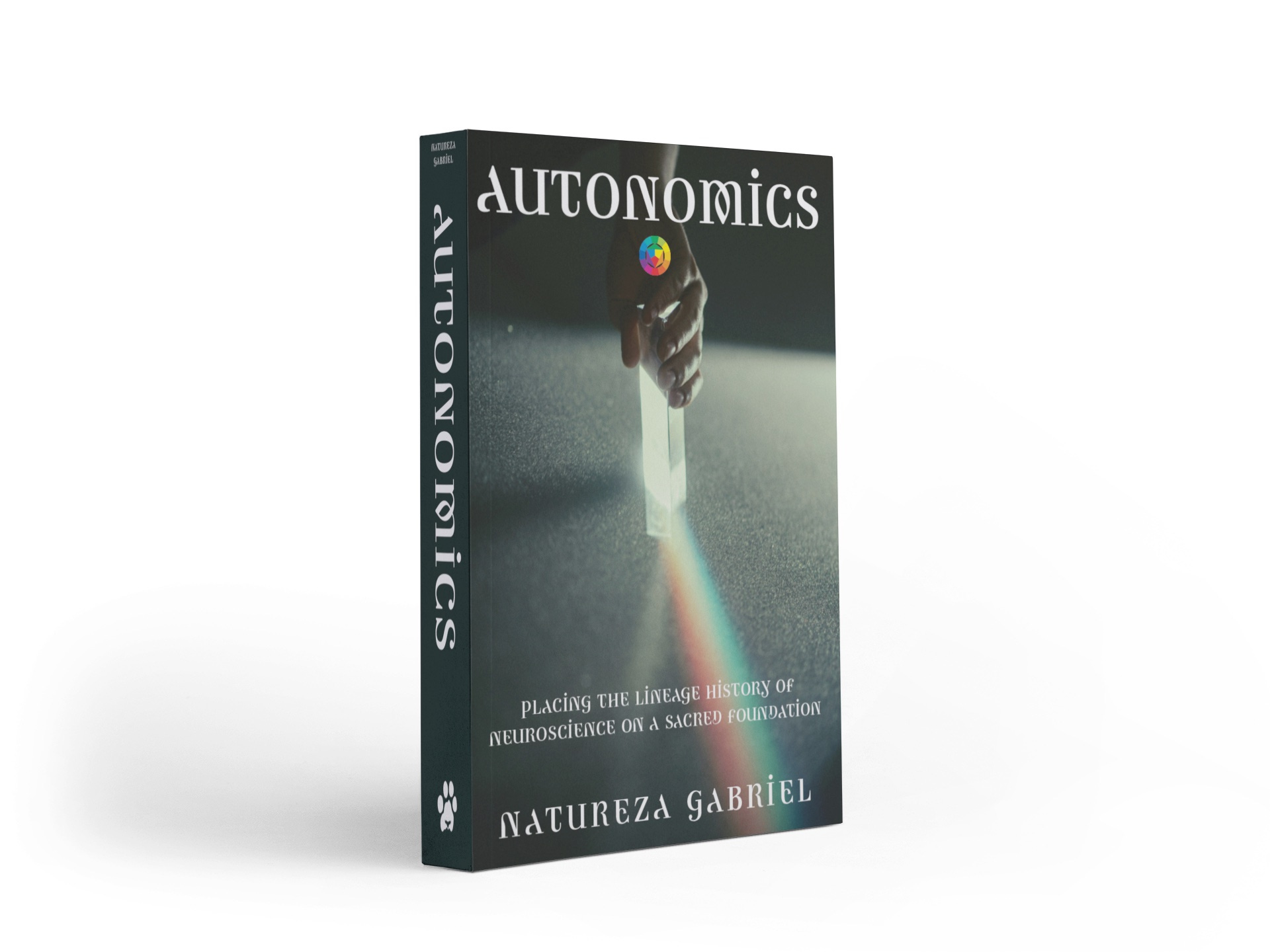
The neuroscience of the modern world has lost contact with the Sacred – ironic given that many of its pioneers were animated by visionary and intuitive ways of knowing. What would be required to reorganize neuroscience doing honor to its animist origins? What would be necessary to refigure the discipline, moving it out of the cranial hegemony of a brain-centric bias and back into the fullness of our embodied experience? How could it be re-conceptualized as a liberatory project and praxis?
In AUTONOMICS, pioneering ancestral neuroscientist Natureza Gabriel, author of The Neurobiology of Connection, GROUND, BODY AS VERB (forthcoming), and Developer of a new foundation model of autonomic physiology, re-writes the lineage history of neuroscience through the lens of interoceptive epistemology, revisiting the work of its principal architects to reveal a lucid trail of animist and visionary neuroscientists.
Rather than being peripheral or anomalous, Gabriel reveals the ways in which visionary, intuitive, and interoceptive knowings are a ground of the line of neuroscientific breakthrough by which the discipline has evolved since inception. From the visionary art of Santiago Ramón y Cajals, to the linguistic origins of Leopold Auerbach’s discovery of the myenteric plexus, to the hidden origin story of Polyvagal Theory, to the birth of Autonomics, Gabriel demonstrates that many of the foundational discoveries in the field happened outside of the orthodoxy of the scientific method.
In this journey, he interrogates the impulses beneath the orthodox mechanisms for assembling medical knowledge, while re-centering the power of self-directed discovery, interoceptive tracking, and the reclamation of deep inwardness as core components of a liberatory psychobiological inquiry. In so doing, he illuminates the depths and contours of a new, and possibly very ancient science, and puts its transformational power back in your hands. Anchored in our embodied subjectivity, a neuroscience grounded in Life Itself uses our felt embodied experience as a primary way of knowing, and a vehicle to new ways of being. Like all of his work, this is a celebration of homecoming to deeper and more embodied ways of knowing and being in the world, putting nervous system science back in service to Life.