

Placing the Lineage History of Neuroscience on a Sacred Foundation

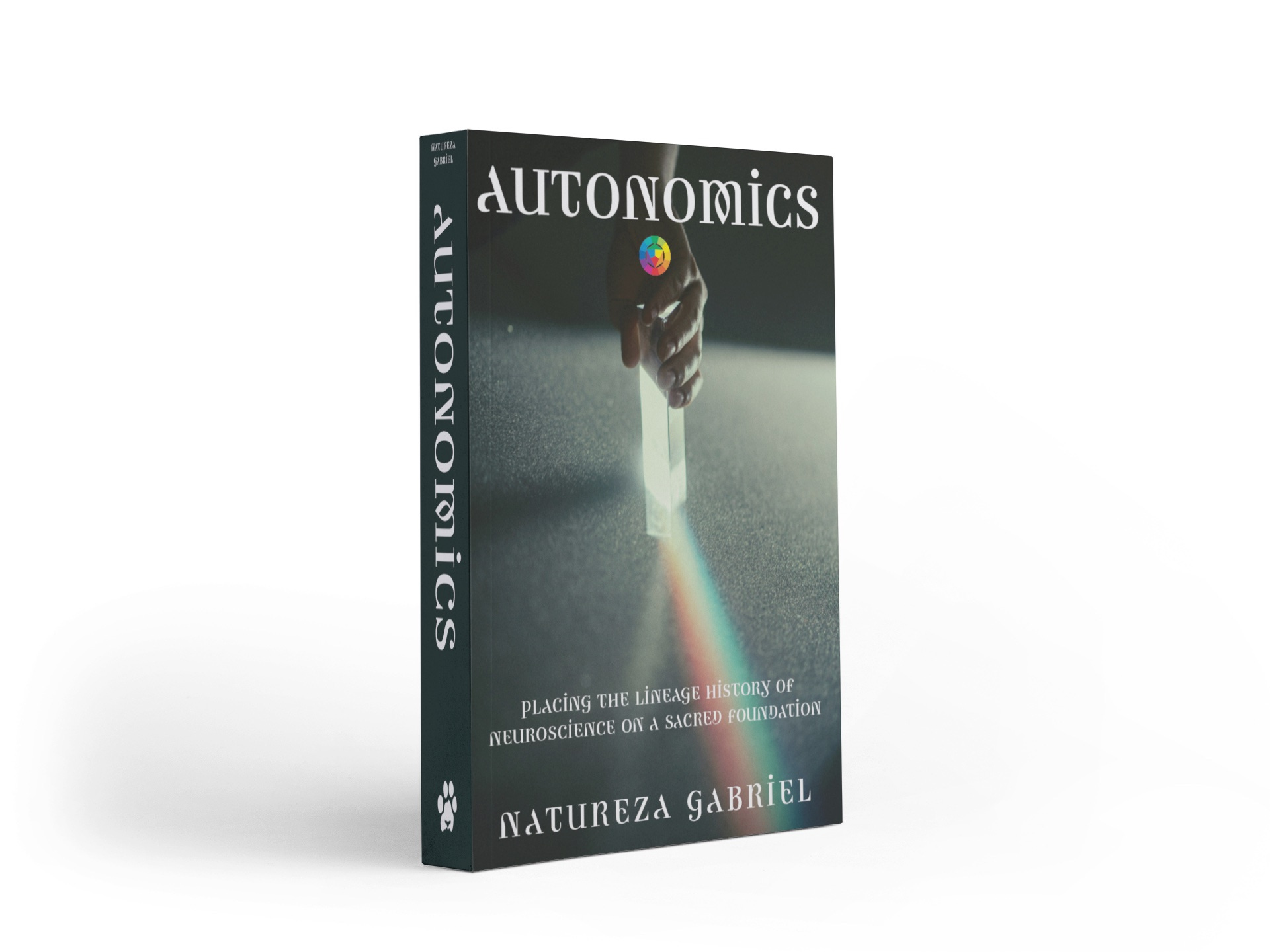
Advanced review copies of Gabriel’s forthcoming book Autonomics: Placing the Lineage History of Neuroscience on a Sacred Foundation are now exclusively available through our website. We have accelerated the production timeline of this book because the topic is intimately connected to the current Polyvagal debate that is roiling the world of psychotherapy.
This is a brief interview with Gabriel about the new book.
Gabriel, why did you write this book?
I started writing Autonomics shortly after publishing The Neurobiology of Connection in November of 2024. I had worked towards being able to write TNOC for about 15 years. Our entire team knew it was groundbreaking work. We knew that it pushed our understanding of in vivo autonomic physiology dramatically forward. The book was based on input from over 100 advisors, 5000 wellness professionals, and a data set collected from more than 10,000 people in 50 countries. Much of it we had validated with a cutting edge autonomic diagnostics tool utilizing respiration as the primary signal, which provides much more nuanced autonomic feedback than HRV/RSA. Chapters of the book had also been read by several thousand people on this Substack, and we’d gotten many hundreds of comments that had shaped the text. The book and the foundation model undergirding it had solved a number of problems with the Polyvagal Theory formulation, including
explaining the movement out of shutdown states straight back into connection states that is readily observable clinically and fundamentally contradicts the notion of the autonomic ladder (people move back through fight-or-flight states from shutdown, IF that was the state that preceded moving into shutdown. If, however, shutdown becomes etched as a habitual stress response the transit from connection to shutdown can be direct, as can its return. It is also possible to transit people from shutdown directly to connection, as a variety of matrilineal healing traditions around the world, as well as psychedelics, do on the regular)
differentiating autonomic neurology from its suffusing neurochemistry, which better maps states like ‘play’, where there is movement but not activation chemistry (traditional neurology wants to call these fight-or-flight states but they are not)
increasing the mapping of the CONNECTION SYSTEM to include the palms and ventral surface of the hands by reconceptualizing the definition of human gestational periods to include the first 18 months after birth (until the closing of the fontanelles) in alignment with understanding from anthropology and indigenous childrearing practices
mapping the GROUNDING SYSTEM through to the feet, recognizing its subcomponents (enteric, psoas, pelvic floor) and recognizing a health-creating facet of what Polyvagal Theory terms the ‘dorsal vagal complex’
rejecting the false division between the spinal cord and brainstem with respect to the vertebrate MOVEMENT SYSTEM.
clarifying that health-creating states coordinate all three autonomic neurologies rather than elevating one (e.g., ventral vagal)
et cetera
Shortly after publication I was alarmed and disheartened by a certain amount of backlash directed at me personally from members of the Polyvagal community, some esteemed therein, who asserted that our work in autonomic physiology was discrediting, attacking, or undermining Polyvagal Theory. So this book began as an attempt to frame transformations in paradigms in neuroscience as productive frictions, à la Thomas Kuhn’s formulation from The Structure of Scientific Revolution.
I was having a hard time understanding why the Polyvagal community was not extremely excited about our work, because we had resolved some of the obvious limitations of the theory in deeply elegant ways, which we had then vigorously tested clinically. The reasons we were able to make these advances were because we were applying Polyvagal Theory as rigorously as any group in the world, and because we were synthesizing highly trans-disciplinary perspectives, including much Indigenous understanding. This was, therefore, not an attack on PVT, but a form of respect that compelled us to move it further forward and broaden its explanatory power.
And this seeing was also surfacing, with greater clarity, significant holes in the very foundation of modern neuroscience. Bluntly- modern neuroscience emerged from within a Cartesian split between the mind and the body. People who believe that ‘I think, therefore I am’ give pride of place in their neurology to the organ where thinking happens, namely the cranial brain. But the ANS is an afferent system. Afferent neurology does not begin in the brain. And all of the extant foundational neuro-anatomical maps in the world were made from cadavers, which have lost all the finest ramifications of their neurology. This means that the entire modern history of nervous system anatomy (1650 to present) was directed by people who identified with their thoughts, and were looking only at the dessicated remainder of a living nervous system that they didn’t think was important. THE EXTRA-CRANIAL FOUNDATION MAPS OF MODERN NEUROLOGY ARE, THEREFORE, FUNDAMENTALLY WRONG.
Modern neuroscience, in fact, barely recognizes the largest SENSORY ORGAN of the human body, which is our interoceptive capacity that subtends sensation in the body entire. You were taught as a child that you have five senses. But those are extero-senses. The mother of all those senses, which can co-opt or cooperate with all of them at will (or at necessity) is in fact an intero-sense. Interoception. Your interoceptive capacity coordinates directly with your flourishing, and unlike vision or hearing has never once been tested in your life. Modern civilization has failed to mention your most important sense exists at all– an astounding realization.

Two things happened fairly quickly as I began to work with the ideas in the book and grapple with the lineage history of neuroscience as a discipline. One of them was that I began to think of the origin story of Polyvagal Theory through the lens of the story Stephen Porges had told me about its more private and personal origins in his own experience the second time I interviewed him at length (Connection Masterclass April 2021). The other was that as I continued to study the lineage history of neuroscience I kept encountering origin stories that were deeply personal and undermined our received narration about how innovations in the field happened.
We are told that innovation happens in science empirically. But that is not what the actual lineage history of neuroscience shows. What the history shows is that innovators have an intuition or revelation, and then seek the evidence that supports it. This flips the notion of the process of discovery on its head and significantly complicates our understanding of where ‘validated’ medical knowledge originates.
When the Paul Grossman critique re-united the public debate about Polyvagal Theory in 2026, one of the things that struck me was the distance between mechanism (source nucleii of a brainstem neural circuit) and meaning. We get super hung up on mechanism, but what matters more at a practical level is meaning.
It also became clear to me that scientific jockeying back-and-forth about esoteric inferences happens in a domain that is both connected to and remote from the experiential intimacy of our felt experience.
I would propose Stephen Porges intuited the ‘social engagement system’ because he felt it, and then sought out a plausible evolutionary mechanism for it. Paul Grossman is refuting it because he cannot feel it, and he is seeking out established inference that refutes it. Both views are partial. And both views are anchored in faulty foundation maps of our neurology.
So this book- Autonomics: Placing the Lineage History of Neuroscience on a Sacred Foundation, is for anyone who is grappling with meaning in science, how we know what we know, the difference between experience (phenomenology, ontology) and empirical claims, and with the notion of what constitutes a ‘valid’ claim on knowledge. It is for anyone interested in the history of neuroscience. It rewrites the lineage history of the discipline by honoring, rather than displacing the central role of interoceptive discovery and personal experience as a primary engine of neuroscientific research and innovation, WHICH IS WHAT ACTUALLY HAPPENED. And by so doing re-unites the discipline with a reverance for life. When I say putting the discipline on a sacred foundation- this is what I mean- that neuroscience, as a discipline, serves the sanctity of all life.
Anything else you’d like to tell us about the book?
The book had six different working titles, including Visionary Neuroscience, and Phenomenology of an Embodied Neuroscience, before I settled on the current one. I worked on it for quite some time before this past week, when something about this moment of Polyvagal debate just gelled the focus, and suddenly I saw clearly how to unite the threads of the book.
Many of the illustrations are in the form of woodblock prints.
Thank you, ordered!