


This is not how I planned to spend my morning, but I have just read a new article from Paul Grossman, Emeritus Research Director in Psychosomatic Medicine at University Hospital Basel, entitled WHY THE POLYVAGAL THEORY IS UNTENABLE. It is well done. A number of the points he is making closely align with our clinical observations, usefully confound the articulation of PVT, and usefully complicate our understanding of the underlying neurophysiology of the vagal regulation of the heart (including peripheral influences to it), the role of breath, and the functional differentiation between the roles of the NA and the DMX in brainstem vagal regulation. As a piece of research synthesis, it is quite strong. It is attached below with my highlights and annotations, or you can find it on the interwebs.
Grossman has been the chief antagonist to PVT for a couple of decades. He seems– how shall I say this– deeply offended that Polyvagal Theory has any audience at all.

Here is the abstract:
Thirty-nine highly acknowledged experts in the areas of the physiology and the evolution of the vagus nerve and of vertebrate social behavior (many whose works have been cited in the polyvagal theory [PVT] literature as supporting the theory) were invited by the first author [Grossman] to participate as co-authors of this article. They were asked to evaluate the PVT and comment upon an overview of the theory written by its author (Porges, 2025a). All those invited, save one, accepted and co-authored the paper. The dissenting scholar was “unfamiliar with the PVT.” This article specifically appraises--based upon the current state of knowledge of autonomic function and vertebrate evolution--several major elements of the PVT, as described in Porges (2025a) and elsewhere. These include: 1) the validity of PVT assumptions that respiratory sinus arrhythmia is a direct measure of the extent of central vagal drive to the heart; 2) PVT characterizations regarding the neuroanatomy and functions of two major brainstem vagal nuclei, the ventrally situated Nucleus Ambiguus and the Dorsal Motor Nucleus of the vagus nerve; 3) PVT assertions regarding the evolution of the vagus nerve; 4) PVT claims about the specificity of mammalian social behavior in relation to nonmammalian vertebrates, and 5) PVT interpretations of earlier seminal physiological literature. All co-authors agree that major tenets of the PVT are not supported by past or current knowledge and, in several instances, are inconsistent with the broader evidence base. Since the topics addressed constitute fundamental premises of the PVT, we conclude that the PVT is untenable, because it is not defensible based on existing neurophysiological and evolutionary evidence. The psychological elements composing the superstructure of the PVT are primarily derived from earlier psychological literature and are neither clarified nor strengthened by PVT constructs that lack evidence. This article does not intend to address alternative explanations about relations between vagal function and psychological processes, although such explanations do exist.
In the same journal, Porges publishes a rebuttal, explaining that essentially Grossman is making a straw man argument (using an inappropriate proxy for the PVT construct), and, in Porges’ words: It is concluded that the charge of scientific untenability does not apply to Polyvagal Theory as formulated, but instead reflects a critique that fails to engage the theory on its own terms. Productive scientific discourse requires representational fidelity, appropriate alignment of levels of analysis, and responsiveness to theoretical and empirical clarification ‒ criteria essential to theory evaluation but not met in the critique under review.

Why does all of this matter? For a number of reasons.
PVT has garnered an extraordinary cultural following, has outsize influence on modern psychotherapy, has spawned cottage industries, and is being highly monetized in therapyland. It is the de facto physiological ‘explanation’ proffered for the success of a number of somatically-oriented trauma therapies, including Somatic Experiencing (or at least it was when I studied the modality circa the 2010s). The Porgesian model has extraordinary influence in the fields of trauma healing, which are incredibly important to the wellbeing of humans.
[Full disclosure here– I am not a totally neutral observer to this debate. I worked closely with Stephen Porges for several years, my firm Hearth Science had an intellectual property development agreement with the Polyvagal Science LLC (his company), I wrote and art directed the Official Polyvagal Theory posters, I led the largest international professional study group on PVT on Facebook, which included about 5,000 practitioners in 2023, and was asked to lead a global Vagus Study group, founded by Sela Weaver, with about 14,000 members, which was studying PVT among other modalities, but declined. In 2024 I published The Neurobiology of Connection, at which time we formally differentiated our work from PVT for a number of reasons I will not fully elaborate here, but included having spent nearly a year trying to meet with Porges about the manuscript, only to get repeatedly shunted to his lieutenants. I had, at the point, draft a summary of thirty-nine points of differentiation between our work and PVT.]
Stephen Porges, himself, has said that PVT is incomplete, and has outlined scientifically how it could be disproved. I will go one step further, and say that IMHO, Steve knows that it is incomplete and has designed a neuro-acoustic intervention, the RRP (Rest and Restore Protocol), which can be understood a non-photic zeitgeber (don’t ask, go read the paper) whose successful mechanism of therapeutic action contradicts the fundamental neurophysiological hierarchy asserted by PVT.
This is important because when a scientific theory asserts its validity through scientific and empirical claims, and those claims are unfounded, its epistemological foundation comes into question.
Were the theory proposed as a philosophy, or in another domain where it is not subject to quantifiable evaluation, this would not necessarily be problematic. But if it is a scientific theory, it is a problem. But here’s a newsflash: this contention is actually good for the field and good for all of us. Grossman’s arguments bear hearing out, if only we could get the two of them talking about the same thing.
One of the central points of fixation in the argument has to do with RSA - respiratory sinus arrhythmia- as a proxy for vagal tone.
GROSSMAN: Respiratory sinus arrhythmia is not a direct and reliable measure of central vagal outflow to the heart (mediated by the ventrally located brainstem Nucleus Ambiguus)
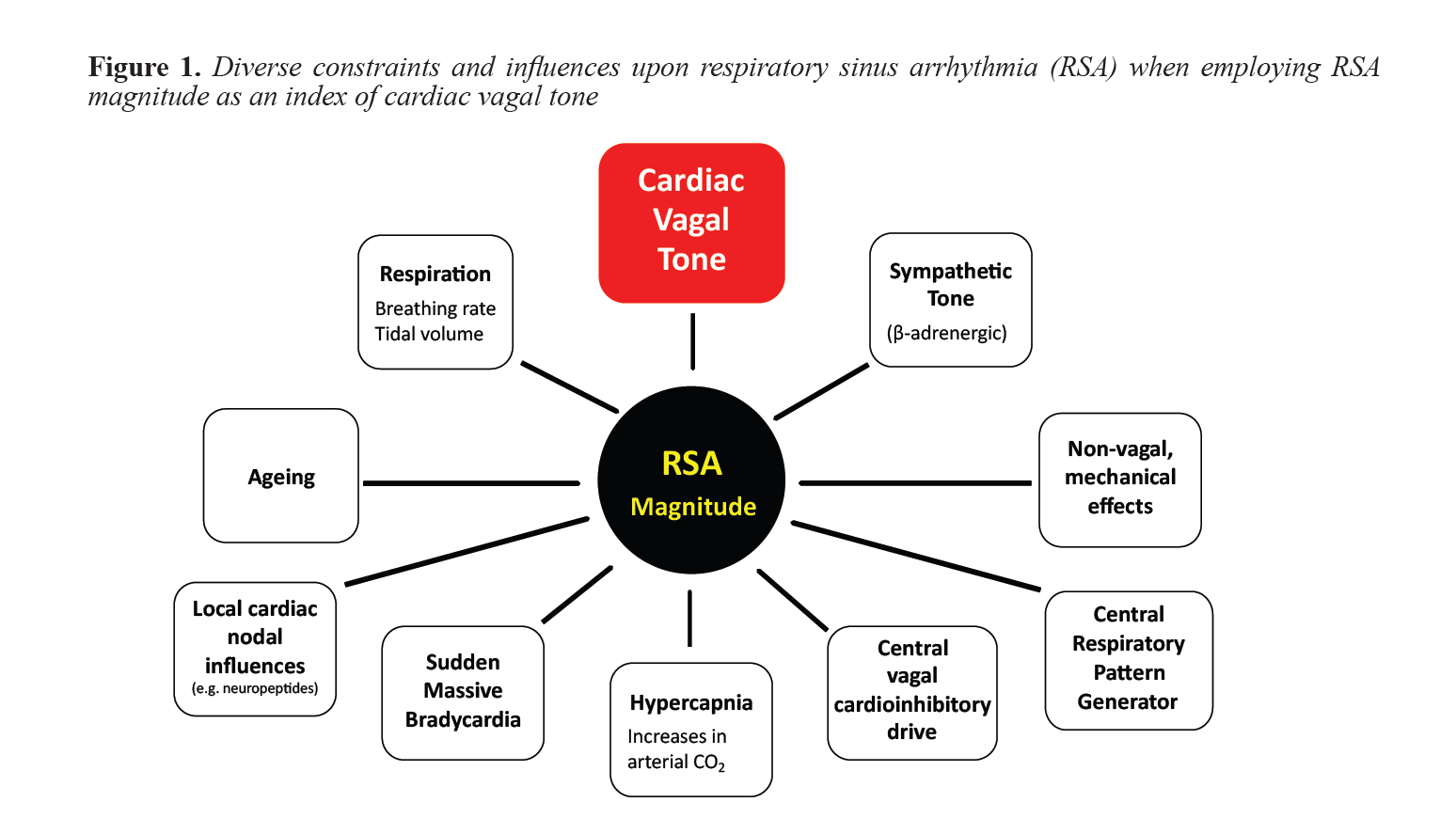
This is an important consideration. And Grossman doesn’t appear to be wrong. Grossman goes on to discredit Porges ‘Evolutionary speculations regarding cardiac vagal control’.
From my perspective, we are looking here at a deeper limitation of scientific inquiry, and one that has to do with our understanding of the construction of ‘valid scientific or medical knowledge’.
During the second in-depth interview I conducted with Stephen Porges, in 2021, he spoke at length about a more private origin story of the theory, which had to do with him playing clarinet in highschool. Before entering the field of psychophysiology, Porges had an experience of his own vagal physiology, and I think it would not be false to suggest that this interoceptive experience was part of the intuitional understanding that guided his development of PVT.
Yet this facet of the theory’s origin in his own direct experience (phenomenological) is not a validated mode of constructing medical knowledge, and therefore has not been properly taken into account in the theory. Porges was (I assert) in part seeking to uncover the science behind something he had experienced directly. In other words, the development of the theory was being guided by something phenomenological and– for that matter– accurate.
The stubborn predicament that Grossman finds himself in, vis-a-vis the theory, is that elements of Polyvagal Theory elegantly explain people’s lived experience. They may not do so comprehensively, the autonomic signals (RSA) used as measurement may be more complex than Porges has asserted in his articles, the evolutionary backstory may be more nuanced. Yet PVT does/ did represent a groundbreaking advance in the lived understanding of the organization of autonomic systems in vivo.
Grossman also– how shall I say this– has all of the social grace of a RAGING INFLAMMATORY RESPONSE. This extends to having spent years actively hacking the Polyvagal Theory Wikipedia page, to which Porges’ various entities have had to repeatedly organize a legal response, as well as offering such choice comments as the below upon an obscure webpage with the temerity to contradict his narrative:
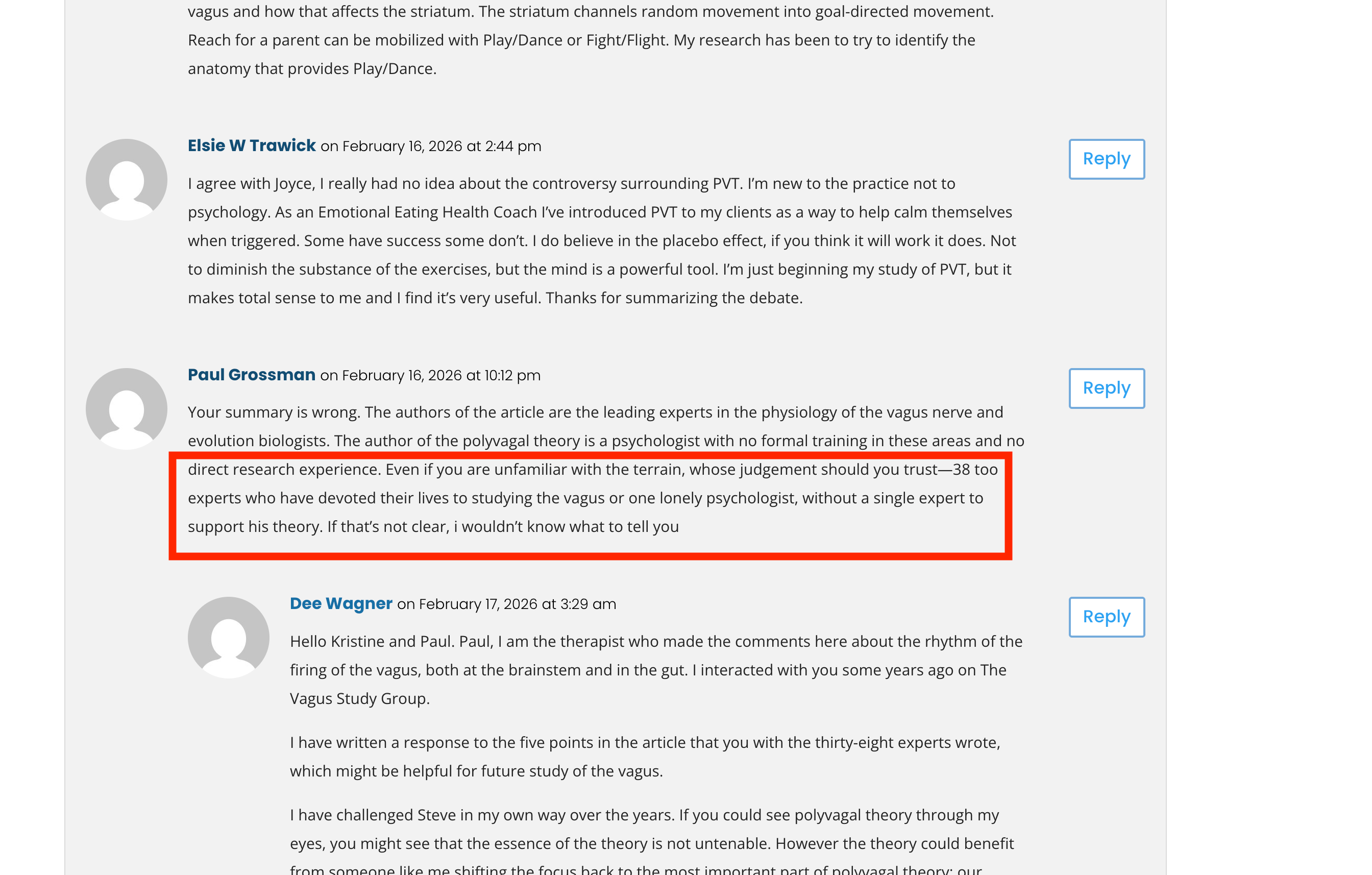
See the comments section on this page that attempts to moderate between the Porges and Grossman points of view. Grossman: Your summary is wrong…Porges is a ‘lonely psychologist’. [He is not a psychologist.]
It is astonishing that someone who is an Emeritus Research Director is moving through the world with a public persona based on terrorizing people who do not agree with him. If he could set down the hatchet he is running around with, two things might happen. He might realize he is cutting off his own nose, and we might all learn something because somewhere in between PVT and Grossman’s critique is what is actually true– and wouldn’t it be interesting if we might learn something about human flourishing in the study of autonomic physiology, rather than attacking and defaming the colleagues with whom we disagree.
Grossman- if you are reading this, which I trust you will, since your name is in it– as I’ve already suggested on your LinkedIn page, please comport yourself publicly with the degree of dignity your title would suggest you deserve. Your work is important. Your voice makes it hard to listen to.
In the realm of the human nervous system, it is advisable to embody your position. Part of the reason PVT has such enduring appeal is because Stephen Porges is, to put it simply, a kind, even-keeled, thoughtful, and socially available person. He is living out through his actions much of what the theory speaks to. From this, you Sir, could learn a thing or two.
Nicely presented Gabriel. I hope it has the effect bringing the holders of the different views and opinions together. After all we all want to improve the wellbeing of all the humans (and non humans) of the world, right?
Well written, Thx!
"Grossman also– how shall I say this– has all of the social grace of a RAGING INFLAMMATORY RESPONSE." 🙏🏻